New DNA Evidence from English Harbour East’s Founding Family
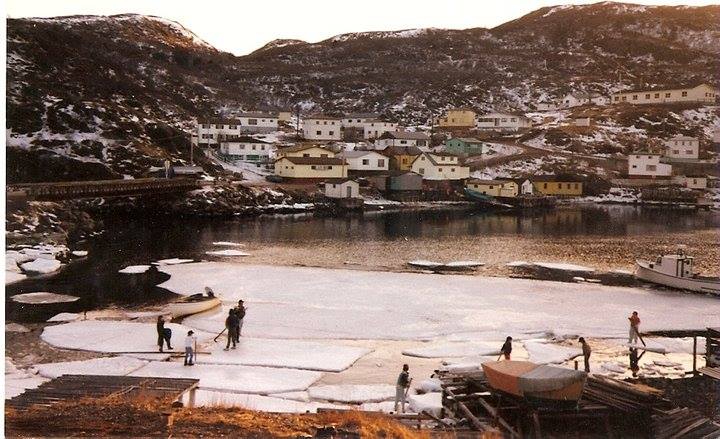
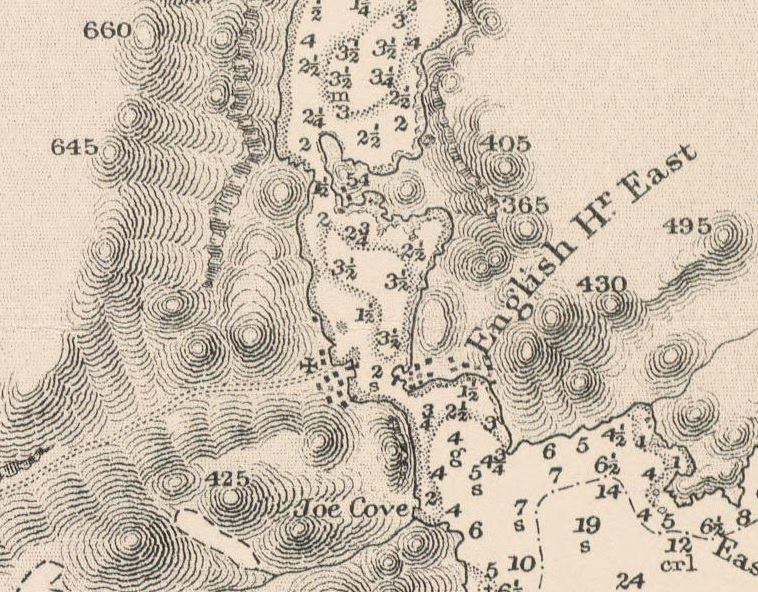
The early history of English Harbour East, Newfoundland and Labrador is rooted in a small number of pioneering families who established permanent settlement in Fortune Bay during the early 19th century. Oral history maintains that two of the founding families of English Harbour East were the Dodge and Hynes families, started by George Dodge from England and Thomas ‘Tommy’ Hynes from Ireland. Extensive research has been conducted into the family of Tommy Hynes’s wife Elizabeth Saunders. Again, oral history maintains that Elizabeth and Tommy lived on the ‘Neck’ of English Harbour East on land that traditionally used by her family, who were of Mi’kmaq descent. Whereas George & Sarah’s family lived on the opposite side of the harbour, in the area of where the present-day community currently lies.
Over the years, a review of DNA matches between the Saunders descendants and the descendants of George & Sarah strongly indicated some connection between their families, and it has been often speculated in recent years that Sarah and Elizabeth (Saunders) Hynes were siblings.
A recent mitochondrial DNA (mtDNA) test has provided some proof of that connection between Sarah and Elizabeth. Introducing an important new dimension to this history—one that finally sheds light on the long-standing mystery of Sarah Dodge’s origins.
The Saunders Family
As detailed in various other articles on this website and others, the Saunders family in Fortune Bay began with John Saunders and his wife Elizabeth. Oral history maintains that they spent some of the time in the Bay D’espoir (Conne River) area and some of the time in Fortune Bay (Terrenceville – then ‘Bottom of the Bay’). Their children were known to be of Mi’kmaq descent, including their daughter Elizabeth (Saunders) Hynes. In addition, the death record of their son Joseph Saunders in 1898 in Terrenceville confirms he was born in Conne River in 1831, a prominent Mi’kmaq community. mtDNA testing on Elizabeth has confirmed she shares a direct maternal line with several ancestral Newfoundland Mi’kmaq women, Mary (Unknown) Park Brooks, Elizabeth (Joe) Blanchard, Charlotte (Jeddore) Cox and many others.
John Saunders and Elizabeth –? had at least the following known children:
- Richard ‘Dickie’ Saunders m. Joanna Clarke.
- Elizabeth ‘Betsy’ Saunders m. Thomas ‘Tommy’ Hynes.
- Catherine Saunders m. James Picco.
- Jane Saunders m. Timothy McCarthy JR.
- Ann Saunders m. Esau Rhymes.
- Mary Saunders m. James Hare.
- George Saunders m. (1) Ann –? (2) Ann Baker.
- Joseph Saunders m. Mary Janes Myles/Miles.
George and Sarah Dodge: Among the First Settlers
The historical record confirms that George and Sarah Dodge were present in the region during the earliest phase of permanent settlement of English Harbour East. Married before church records were readily available, they had their first child, Mary, in 1825. By the mid-1830s, their family is firmly documented in Church of England records associated with Reverend Edward Wix, confirming their established presence in the community.
By the time the traveling Reverand Edward Wix visited English Harbour East in 1835, they had 4 children. Not much is known about them, other than that George was directly from England, with little to no history about Sarah.
George Dodge and Sarah –? had at least the following known children:
- Mary Dodge born 1825, married Samuel Barnes.
- Ann Dodge born 1827, married Edward Kearley.
- William Dodge born 1829, married Charity Hatch.
- Thomas Dodge born 1832, married (1) Harriett Ann White (2) Elizabeth, widow of Robert Myles/Miles.
- Sarah Dodge born 1841, married John Trivett.
- Elizabeth Dodge born 1846, married William Phillips.
- George Dodge born 1848, married Phoebe Baker.
These children and their marriages illustrate the rapid integration of the Dodge family into the broader kinship network of Fortune Bay, linking them to several other foundational families in the region.
A Genetic Breakthrough: The Saunders Connection
A direct female descendant from Sarah, through her daughter Sarah (Dodge) Trivett was recently mtDNA tested and results have conclusively confirmed that Sarah, wife of George Dodge, shares the exact same mtDNA signature as Elizabeth, wife of John Saunders. Because mitochondrial DNA is passed unchanged from mother to child (through the maternal line only), this result provides strong evidence that they HAVE to be related on the mother’s side.
Combined with previous autosomal DNA evidence and the fact that mtDNA is inherited strictly through the maternal line, this result has clear genealogical implications:
- Sarah was a daughter of John and Elizabeth Saunders (most likely, based on combined DNA evidence)
OR
2. Sarah was a sister of Elizabeth – wife of John Saunders
At present, without a corresponding parish record (such as a baptism or marriage explicitly naming Sarah), both scenarios remain viable. The DNA does not distinguish between mother–daughter and sister relationships—but it does firmly place Sarah within the same maternal lineage. Given the strength of the autosomal DNA matches, I’m inclined to believe that she was a daughter of Elizabeth rather than a sister. If this is correct, Sarah would have been John & Elizabeth’s eldest child, likely born between 1805 and 1809.

A Family Rooted in Place—and Now in DNA
George and Sarah Dodge stand at the foundation of English Harbour East’s permanent settlement. Their presence by 1825, and the rapid expansion of their descendants, mark them as one of the defining families of the community.
For decades, Sarah’s origins remained unclear—lost in the gaps of early Newfoundland record-keeping.
Now, through mtDNA analysis, a new piece of that puzzle has emerged. The evidence strongly ties her to the Saunders maternal line, opening a clear path for further research.
This is a powerful example of how traditional genealogy and mtDNA testing can work together—transforming long-standing assumptions and theories into evidence-based conclusions.
What is her haplogroup? And with what company was she tested so others can compare theirs? Will you have a gedmatch number for her kit?
This is my family can someone pay for a dna test I’d love to see what it says since it’s my maternal side
HztPBzsRTjKHMwpHOvh
MVQKEDhCrinZqXXymOL
dsmcTdmLVTEDZEVFSYg
wjFuZLPUZyVNVKQPoKY